Article · Tax

Cyprus provisional tax: two dates, 75 percent

Provisional tax is an estimate you submit yourself. Estimate too low and you pay a surcharge, and it is calculated differently from what most people expect.

By Alexander Volkhine3 min read
31 July and 31 December75 percent limit10 % surcharge
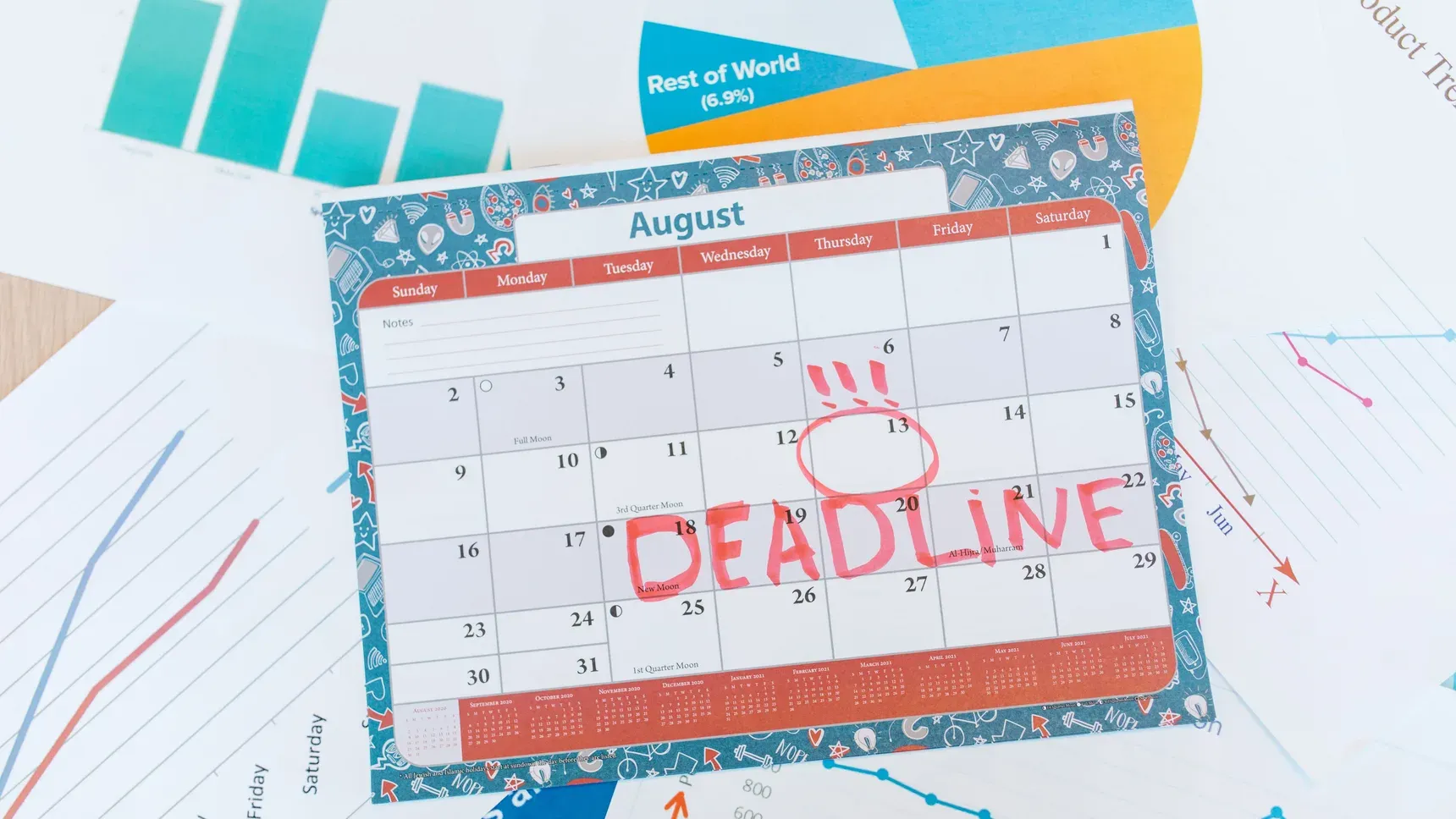
A calendar with a deadline marked

RDNE Stock project / Pexels

What is provisional tax?

Cyprus lets you pay the tax on the current year in advance, before your profit is known. For that you estimate yourself what you will earn and pay on it in two instalments. At the year end it is settled: if you paid too little you pay the balance, if you paid too much you get it back.

In short

Provisional tax in Cyprus is paid on the estimated taxable profit of the current year, in two equal instalments. For the 2026 tax year the dates are 31 July 2026 and 31 December 2026. It affects companies tax resident in Cyprus that expect a profit, and self-employed persons with taxable business income. The estimate can be adjusted up or down until 31 December; after that it is fixed. The decisive rule is the 75 percent limit: if the estimated taxable profit is below 75 % of the profit later assessed, a surcharge of 10 % applies. The corporate tax rate used in the calculation has been 15 % since the 2026 tax year, instead of 12.5 %. Anyone expecting no profit submits no estimate and pays nothing; a surcharge then arises only if a profit does come out at the end.

  • 31 JulyFirst instalment, 2026 tax year
  • 31 DecemberSecond instalment, also the last chance to correct
  • 75 %Lower limit of the estimate without a surcharge
  • 10 %Surcharge if it falls short
  • 15 %Corporate tax rate used in the calculation
  • 2 instalmentsEqual in size, not following the profit pattern
Accounting that knows these deadlinesVolk Accountant keeps invoices, receipts and VAT for Cyprus companies in one place.
Try 14 days free

Two dates, two equal instalments

Cyprus charges the tax on the current year in advance, before the profit is known. The basis is an estimate the taxpayer submits themselves.

For the 2026 tax year:

Instalment Due
First half 31 July 2026
Second half 31 December 2026

The two instalments are equal. They do not follow the course of trade. Anyone who earns their money in the fourth quarter still pays half in July.

Affected are:

  • companies tax resident in Cyprus that expect a profit
  • self-employed persons with taxable business income

The 75 percent limit, and why it costs more than expected

This is the rule most people get caught on.

If the estimated taxable profit is below 75 % of the profit later assessed, a surcharge of 10 % applies.

The consequence is an incentive that runs against instinct: estimating cautiously is expensive. Anyone pitching low to protect cash flow runs straight into the surcharge. Anyone pitching high pays too much temporarily and gets the difference back.

31 December is the last opportunity

The estimate can be adjusted until 31 December, upwards as well as downwards.

That makes the second date two things at once: it is the due date of the second instalment and the last day on which the estimate can still be rescued.

In practice: in December you should know the profit accrued so far and hold it against your own July estimate. If the estimate is below 75 % of what is foreseeably coming out, correct it now. On 1 January that is no longer possible.

Estimate 1st instalment review 2nd instalment Start 31 July November 31 Dec.
December is not just a payment date but the last day on which the estimate can still be raised.

The 2026 trap: the new rate

Anyone carrying their estimate forward from the previous year may also be carrying forward the old tax rate.

Up to and including the 2025 tax year, corporate tax was 12.5 %. Since the 2026 tax year it has been 15 %. That is 20 % more tax on the same profit.

An estimate calculated at 12.5 % therefore automatically sits at 83 % of what 15 % would produce. That just clears the limit but leaves no room for a profit that turns out higher than expected. Two deviations together, and the surcharge is there. The details of the new rate are in the guide to corporate tax.

What we could not substantiate

  • The level of late payment interest for 2026. That interest applies to amounts paid late is not in doubt. We did not check the rate set for 2026 against an official source for this article and therefore do not quote it.
  • Whether the surcharge applies alongside late payment interest or instead of it. The sources treat the two separately without setting out their relationship.
  • The treatment of companies formed mid-year. Whether and how the two dates shift when a company comes into existence during the year we could not establish conclusively.

If your case hangs on that, the question belongs with somebody who puts their name to the answer: Cyprus setup from one place.

Bookkeeping: estimating with figures

The 75 percent limit is only a problem if you do not know the running profit. Anyone who knows it is not estimating but calculating.

In Volk Accountant the current year’s profit runs along, and the tax estimate puts the 15 % on it, together with a suggested reserve. In July and December the question then becomes a lookup rather than a guess from feel.

Which other dates fall in the Cyprus year is in the overview of tax deadlines.

On this page
FAQ

Provisional tax in Cyprus: common questions.

When are the instalments due?

For the 2026 tax year on 31 July 2026 and 31 December 2026, each half of the estimated amount. The instalments are equal and do not follow how the profit is spread over the year. A business with seasonal trade pays the same amount in July as in December.

What happens if I estimate too low?

If your estimated taxable profit is below 75 % of the profit later assessed, a surcharge of 10 % applies. This is the rule most people fall over, because they estimate cautiously to protect cash flow and run straight into the surcharge.

Can I correct the estimate?

Yes, until 31 December, in both directions. 31 December is the last opportunity to raise the estimate without triggering the surcharge. After that the amount is fixed, and any shortfall is measured against the year's result.

Do I have to pay if I expect no profit?

No. Anyone expecting no taxable profit submits no estimate and pays nothing. In that case the surcharge arises only if a profit is assessed at the year end after all. So provisional tax does not affect a company with no activity, although the other filing duties very much do.

Does this apply to the self-employed as well?

Yes. Provisional tax covers not only companies but also individuals with taxable business income. The dates are the same. What differs is the rate: for a company it is 15 % corporate tax, for an individual the income tax scale.

What exactly do the 10 percent apply to?

To the tax, not to the difference between estimate and reality. That is where many get it wrong: the surcharge is not measured against the small amount that was under-estimated but bites on the tax figure. Falling just short of the 75 percent limit therefore costs considerably more than the shortfall itself would suggest.

What does the new corporate tax rate change?

The arithmetic gets bigger, the rule stays the same. Since the 2026 tax year corporate tax has been 15 % instead of 12.5 %. Anyone carrying their estimate forward from the previous year without adjusting the rate automatically estimates a fifth too low and can slip below the 75 percent limit on that alone.

Cyprus accounting software compared

We put Volk Accountant openly next to other providers, with a source and a date checked behind every detail.

Sources

Content reviewed on 16 October 2026. Not tax advice: this page explains the general rules. Your accountant decides what applies to your case.

Estimating with figures instead of feel

Volk Accountant tracks the running profit and the 15 % on it, so the July estimate rests on figures rather than on last year. From €29 a month.

Start a 14-day free trial
No credit cardServers in Frankfurt, encrypted